What Most People Get Wrong About Caring for a Vintage Watch (And How to Do It Right)
Credits @RGM Watch Co.
I’ve seen it a million times. You buy your first vintage watch and you want it to look like new so you buy some generic polish, a cloth, and start polishing. In just one mistake you’ve already cut the resale value in half. Almost all new collectors make the same mistake in treating vintage watches like watches that need their help, not like art pieces meant to be admired.
What people are saying
There are a lot of parts about owning a vintage watch that people talk about, how to buy the right one, how to get it serviced or fixed, how to clean it at home, and what to do (and not to do) when wearing a vintage watch. People pretty much agree that vintage watches need to be regularly taken care of, kept away from water, and purchased from a reputable seller. What is harder to find is people agreeing on whether to polish your watch, where to get it fixed, and how much to treat it like a baby instead of a watch
What experts have to say
Experts in the community, like watchmakers, seasoned collectors, and trusted sellers do and say a lot of things that your average collector might not. Oftentimes watchmakers vouch that vintage watches should be inspected and serviced as soon as every 5 years, and by experts in specific types of work rather than a run of the mill local watchmaker. Seasoned collectors often prioritize condition and originality over other aspects like rarity and materials, often because of personal preference but also because of value. Sellers tend to prefer a mix of rarity, close to new condition, and provenance, this allows them to market the watch as a one of a kind in a lot of cases, rising prices significantly.
The Things Nobody Tells You
Vintage watches are a very unique thing to collect, their intrinsic value is often very different from the price they sell at because people pay a lot more when they feel it is special, rare, and evokes an emotional connection. One of the greatest challenges with vintage watches is part availability and value in comparison to price, as time goes on, the stock of remaining parts continues to decrease, and the price of parts increase. In the end, you will end up paying a lot more to take good care of your vintage watch than you paid to purchase it in the first place.
The refined list of how to care for your vintage watch
• Start preparing for the future: include repairs and service costs in your initial investment.
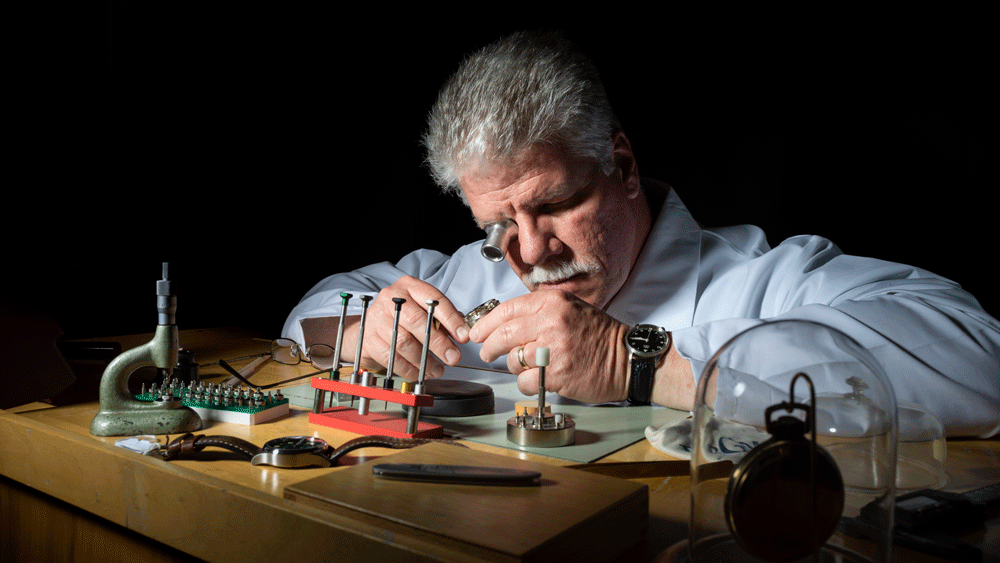
• Let the professionals handle it: people specialized in restoration use techniques and tools that don’t apply to new watches, average watchmakers will bring ruin to your watch
• Learn how to use it: Most mistakes don’t happen to you, they come from you. Take the time to learn how to properly wind your watch, change the date, and use extra features like stopwatches, alarms, extra time zones, and specialized complications. These parts were nearly all handmade and designed to last, considering that the owner knows how to properly operate the features.
• Cleaning: Use a soft cloth and a mild toothbrush to clean without leaving marks, avoid polishing in most scenarios, use specialized materials like PolyWatch, for at-home cleaning and revival. When removing debris, use brushes and watchmaker approved materials like a toothpick to remove dirt while keeping your watch scratch free.
• Avoid contact with water- Even watches designed to withstand water were likely made before you were born, replace seals at service intervals, in the worst case of rain or weather always consider a different watch.
• Remember: All these things considered, it’s your watch and if it lasted this many years, it can probably withstand whatever it is that you do.
What to do next
Caring for a vintage watch well mostly means respecting what it is: a precision instrument made in a different era, under different standards, with materials that have now aged in different ways. The mistakes aren’t usually dramatic. They’re small missteps that compound quietly. A drop of moisture here, a few unnecessary winds there, a polish that wasn’t meant for a 1960s case alloy.
If you’re unsure where your piece stands, bring it in. We’ll tell you honestly what it needs and what it doesn’t. Not every vintage watch needs a full service, but every vintage watch deserves to be assessed by someone who knows the difference.
Book a free assessment today and let’s make sure your watch gets the care it deserves.